 UFO
The weather that day
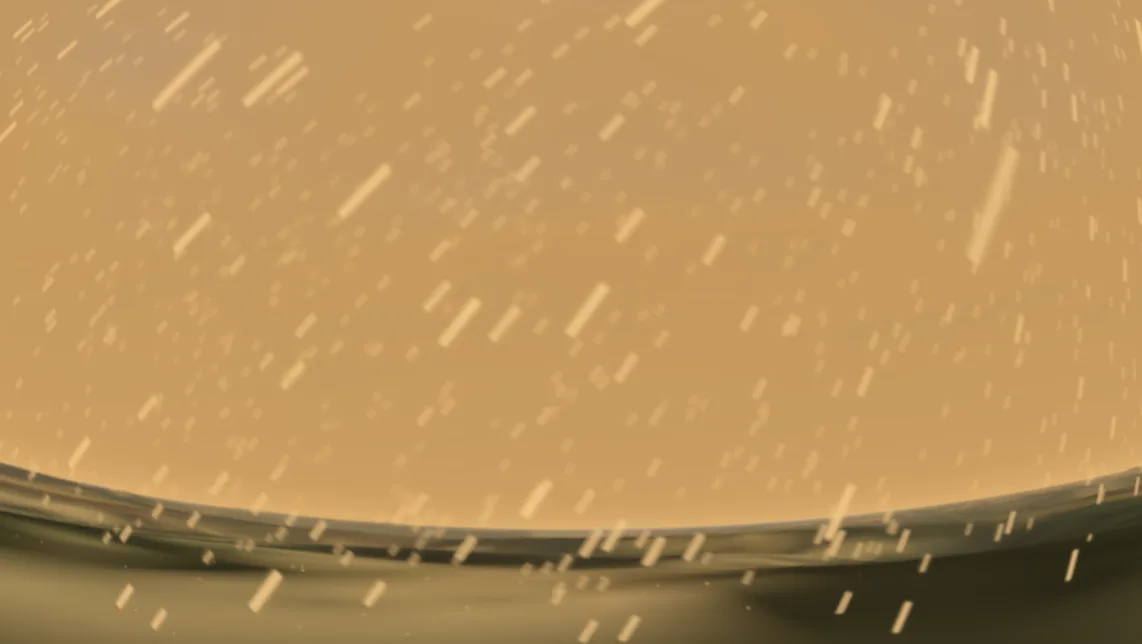
Cloud cover, cloud base, rain, snow, hail, storms and their thunder, and wind are read from ERA5, the ECMWF reanalysis: hourly, worldwide, from 1940 on (for the last five days, which it has not caught up with, the forecast model's own analysis). They are keyframed along the observation, so a sky that cleared during those four minutes clears in the reconstruction.
A record says how much of the sky each layer covered, never where: the arrangement of the clouds is the reconstruction's own. It is drifted along the day by the record's wind and set apart from one day to the next, so that scrolling through the hours shows clouds that move and change, but it is not a picture of the clouds that were there.
Cloud attenuates every celestial body rather than merely covering it, which is what makes a Moon behind thin cloud read as a Moon behind thin cloud.
The exact query is kept in the recording. That is the part that matters: the claim stays checkable decades later, by someone who does not trust this tool.
Every source is named where its data is reported, with the attribution its licence requires — and can be swapped for another. The picker is the credit. What is still missing, and what each item is waiting on, is on the roadmap.